
Plan from stock or demand
Support make-to-stock availability as well as make-to-order commitments where production or preparation starts against demand.
Explore Inventory →Connected commerce operations for Indian businesses
Sell through offline commerce, a Point-of-Sale Device, your Online Store, WhatsApp and social-media catalogue sharing, online marketplace workflows and ONDC while keeping inventory, catalogue, transactions, orders, fulfilment, logistics, payments and business visibility connected.

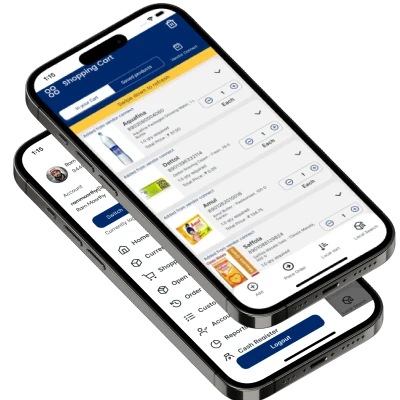
The problem
Every additional channel, transaction type or delivery partner can create another stock view, order process, logistics workflow and payment follow-up. Lekhha connects these workflows into one operating context for the business.
One connected operating platform
Start either with available stock or with demand that triggers production, choose how the transaction should happen, then carry the commitment through fulfilment, logistics and payment.
Support make-to-stock availability as well as make-to-order commitments where production or preparation starts against demand.
Explore Inventory →Support conventional sales, shared-catalog journeys and supported peer transactions from the same product foundation.
Explore Commerce →Bring accepted commitments into one flow and move them towards fulfilment.
Explore Orders →Connect fulfilment to logistics partners, serviceability, rates, pickup and delivery status.
Explore Logistics →Track payment activity alongside the transaction that created it.
Explore Payments →Use central views and reporting to understand operating activity.
Explore Analytics →One business. Multiple channels.
The channel can change — including WhatsApp and social media. The operating core should not.
Stock- and demand-led planning, catalogue, social and messaging discovery, commerce, orders, fulfilment, logistics, payments, returns and issue resolution, customer ratings and feedback, and business visibility remain connected — with enterprise integration, configuration, extensions and targeted AI available around the core.
Beyond conventional sales
Peer Transactions let supported non-commercial exchanges use the same connected operating foundation instead of becoming informal, untracked activity.
Use an auction-style allocation process for giveaway transactions where this workflow is enabled.
Record products moving between participants even when no conventional sale takes place.
Support temporary product access and return-oriented peer transactions where enabled.
The operating journey
Start with make-to-stock availability or make-to-order demand, let discovery happen through offline, digital, WhatsApp or social channels, carry the commitment through fulfilment, logistics and payment, capture returns, issues, ratings and customer feedback, then use business insight to improve the operating model. Where an enterprise ERP is present, agreed master and transaction data can remain governed there as the system of truth while Lekhha connects the commerce journey around it.
Beyond the standard flow
The connected core provides the starting point. Enterprise requirements can then be addressed through configuration, scoped extensions and targeted AI add-ons rather than forcing every organisation into one fixed process.
Use the existing operating model as the baseline and configure the parts that vary by business, role, channel or operating policy.
Where a requirement is not covered by the standard product, define a scoped enhancement, integration or custom workflow around the enterprise’s validated need and feedback.
Layer problem-specific AI capabilities onto connected business context to address individual challenges, with each solution defined against a real operating use case.
Logistics partner integration & orchestration
Use connected logistics partners and aggregators to coordinate the delivery journey instead of moving fulfilment into a separate operational silo.
See Lekhha in action
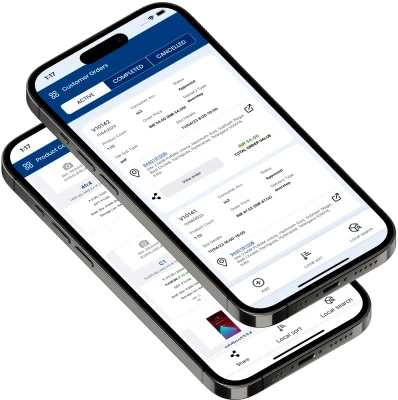
The user benefit comes first. The product screen proves how Lekhha enables it.
Catalogue workflows structure product information for direct selling, WhatsApp/social sharing and supported peer activity.
Incoming commitments are brought into an operating flow for acceptance, fulfilment and delivery.
Connected views make operating activity easier to understand across the business.
Designed for enterprise integration
Lekhha is designed to operate at the commerce and execution edge while an enterprise ERP — for example SAP S/4HANA or ECC, Oracle ERP, Microsoft Dynamics 365, or another enterprise platform — remains the authoritative source for the master and transactional data that the enterprise chooses to govern there. The exact integration is scoped, configured and validated for the individual enterprise.
Keep enterprise-governed product, customer, pricing, inventory, finance and other agreed records mastered in the ERP according to the enterprise data-ownership model.
Where required by the enterprise design, integration can be implemented through governed interfaces such as APIs/OData, IDoc/ALE, REST/SOAP or middleware such as SAP Integration Suite. Equivalent governed patterns can be used for other ERPs.
Use Lekhha for catalogue sharing, WhatsApp and social discovery, channel commerce, order orchestration, fulfilment, logistics, ratings and feedback while synchronising agreed events and data with the ERP.
Enterprise integration is not presented here as an already evidenced, universal product connector. Integration scope, direction, frequency, conflict rules and data ownership are defined per enterprise, and a specific ERP connector or automated flow is treated as live only after it has been configured and validated for that customer.
Next step
Tell us how you make, stock, sell, share, exchange, fulfil and deliver today — including how you use WhatsApp and social media — and where those workflows become disconnected or need enterprise-specific adaptation.

WhatsApp & Social Commerce
Turn catalogue sharing into a route back to structured commerce.
Share live Lekhha catalogue links through WhatsApp, LinkedIn, Facebook, Instagram and other supported communication channels, then let interested customers continue into the Lekhha catalogue, cart and order journey.
- Use one catalogue rather than recreating product information for every social channel.
- Share catalogue links in WhatsApp conversations, groups, posts and campaigns.
- Use LinkedIn, Facebook and Instagram to distribute catalogue links and product discovery.
- Bring the resulting customer selection back into Lekhha shopping-cart and order workflows.
- Keep inventory, fulfilment, logistics, payment and reporting connected after the order is created.
Explore WhatsApp & Social Commerce →